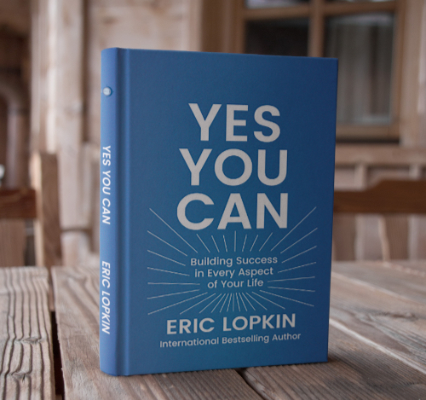
Potential is powerful, but potential alone does not create progress. You need belief, structure, action, and a system that helps you turn what is possible into what is real. That is the promise behind Yes You Can. The book introduces Human Centered Achievement as a practical framework for people who know they are capable of more and are ready to stop treating success like a mystery.
Achievement Starts With the Human Being
Too many success systems focus only on tactics. They tell you to work harder, manage time better, set bigger goals, or copy what someone else did.
Human Centered Achievement starts in a stronger place. It begins with the person behind the goal because your mindset, focus, energy, habits, communication, and ability to improve shape every result you create.
This approach matters for business, leadership, personal growth, and career development. A stronger person builds stronger plans, makes stronger decisions, and follows through with greater consistency.
The Framework Is Built on Science and Practice
Yes You Can explains Human Centered Achievement through a foundation of quantum physics, psychology, neurology, and epigenetics. Those disciplines help explain why focus, belief, behavior, environment, and repeated action matter so much.
The message is not that success happens magically. Instead, the book shows that people change when they understand how they think, how they respond, how they build habits, and how their choices shape future outcomes.
Science gives the framework credibility. Practice gives it power because the real test is whether you can use it when the pressure is real and the goal matters.
The Seven Elements Give Achievement a Structure
Human Centered Achievement breaks progress into seven connected elements: mindset, focus, processes, communications, innovation, evaluation, and continuous improvement. Each element matters, but the real strength comes from using them together.
Mindset shapes what you believe is possible. Focus determines where your energy goes, while processes help you turn effort into repeatable performance.
Communication keeps people aligned. Innovation helps you solve problems, evaluation tells you what is working, and continuous improvement keeps you from settling.
This structure gives readers a clear way to examine where they are strong and where they are stuck. Once you see the weak point, you can stop guessing and start improving.
Mindset Turns Possibility Into Permission
The title Yes You Can is not empty encouragement. It is a challenge to stop limiting your own future before the work even begins.
A fixed mindset tells you that ability is already decided. Growth thinking reminds you that skills can be learned, habits can change, and effort can create a different result.
That shift matters because people rarely outperform the identity they accept. When you begin to see yourself as someone who can grow, adapt, and achieve, your decisions start to change.
Focus Turns Energy Into Progress
Modern life rewards distraction, but achievement requires concentration. A person can work all day and still make little progress if attention keeps moving in every direction.
Human Centered Achievement puts focus at the center of forward movement. When you define what matters most, you give your energy a target.
Clear focus also protects your time. It helps you say no to low-value tasks, reactive decisions, and opportunities that look attractive but do not support your real goal.
Process Turns Effort Into Results
Motivation gets attention, but process gets results. When your system is weak, every goal requires more willpower than it should.
Yes You Can helps readers see that strong achievement depends on repeatable actions. Processes make progress easier because they reduce confusion, improve consistency, and create a path you can follow when motivation fades.
A good process does not trap you. It supports you, and it gives your ambition the structure it needs to become sustainable.
Evaluation Keeps You Honest
Many people confuse movement with progress. They stay busy, check boxes, and wonder why the outcome never changes.
Evaluation solves that problem by forcing you to look at results clearly. What is working? Which piece needs adjustment? One effort may be producing value, while another only feels productive.
A strong strategy requires honest feedback. Without evaluation, you repeat mistakes longer than necessary and miss the chance to improve faster.
Velocity Coaching Turns the Framework Into a Plan
Reading Yes You Can gives you the foundation. Velocity Coaching gives you the focused implementation path when you want help applying the principles to a specific challenge.
A one-time coaching session can help you clarify what you want, identify what is blocking progress, and create a strategic action plan. That makes it a strong next step for entrepreneurs, executives, professionals, and leaders who need direction now.
The book helps you understand the system. Velocity Coaching helps you use the system with urgency, focus, and accountability.
Your Next Breakthrough Needs a Strategy
Success does not require you to become someone else. It requires you to develop the strongest version of who you already are.
Yes You Can gives you the Human Centered Achievement framework for that work. Get the book, start applying the principles, and book Velocity Coaching when you are ready to turn potential into a clear action plan.


